

Field GuidesStraight answers
Turf, explainedfor the Lowcountry.
Plain-spoken guides on the questions Charleston homeowners ask us most — written by the crew that builds the yards.
Guide 01 · 6 min read
Artificial Turf vs. Grass in Charleston, SC: An Honest Comparison
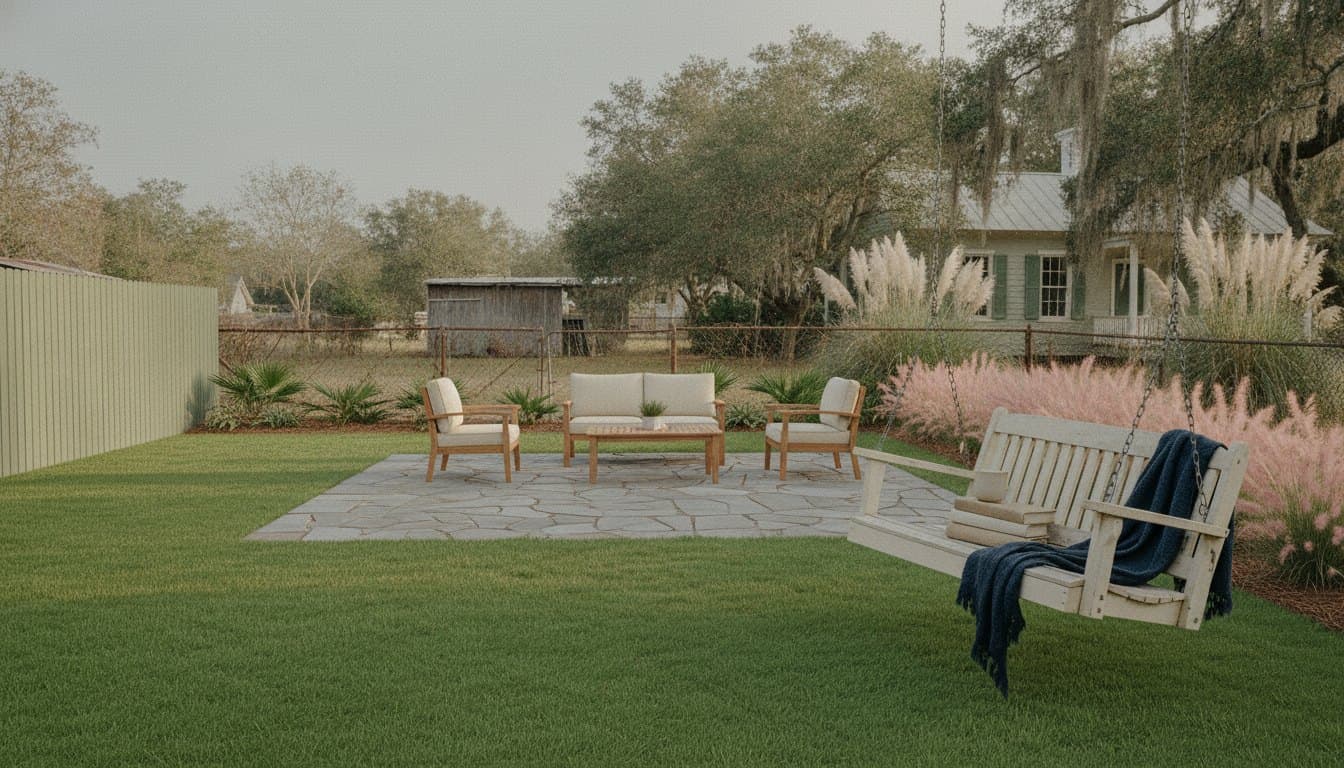
For most Charleston yards that struggle with shade, sandy soil, heavy foot traffic or dogs, professionally installed artificial turf outperforms natural grass: it stays green year-round, needs no mowing, watering or fertilizer, and drains faster after storms. Natural grass still wins on surface temperature in full summer sun and for homeowners who enjoy lawn care.
Read the guide →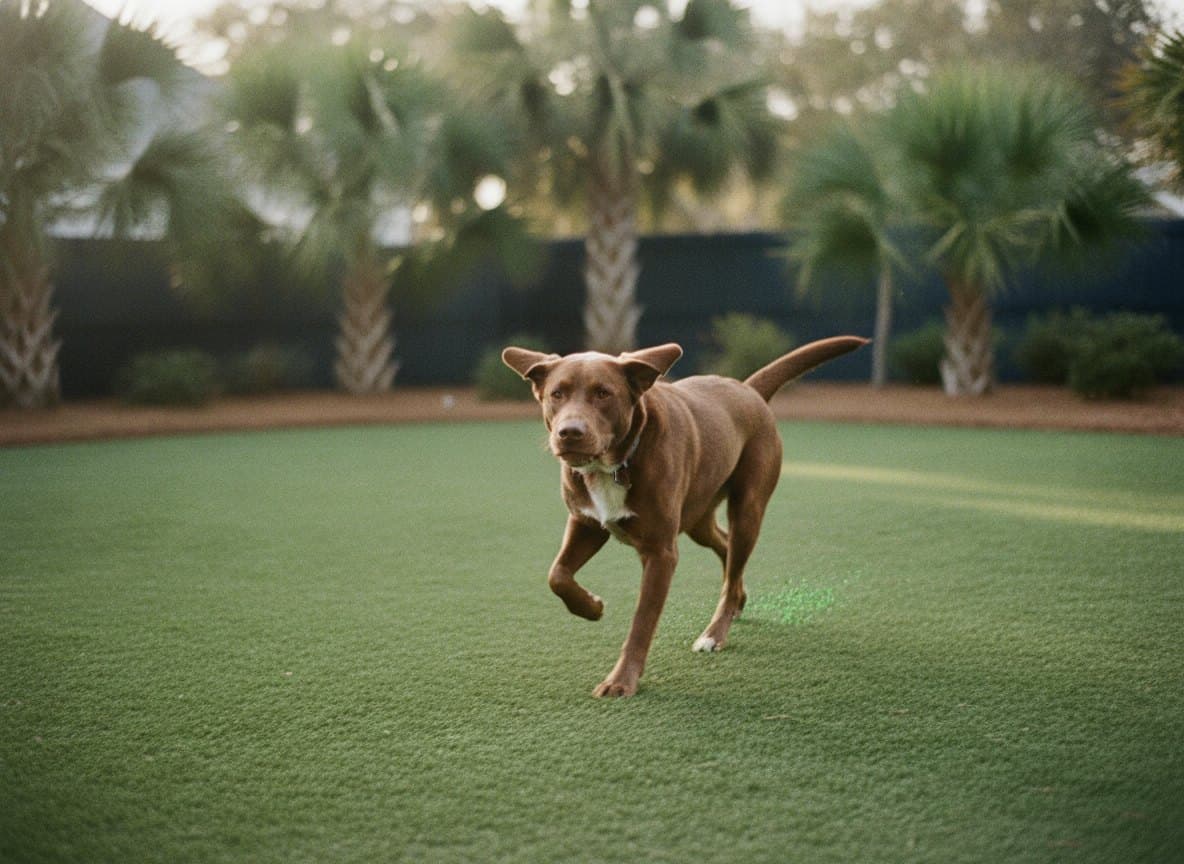
Guide 02 · 5 min read
The Best Artificial Turf Setup for Dogs in Charleston’s Humidity
The best artificial turf for dogs is a system, not a single product: a full-flow or highly perforated backing so urine drains straight through, an open-graded stone base that can be flushed with a hose, an antimicrobial or odor-control infill, and securely anchored edges that discourage digging. In Charleston’s humidity, drainage and rinse-ability matter more than blade style.
Read the guide →
Guide 03 · 4 min read
Does Artificial Turf Drain? What Happens in a Lowcountry Downpour
Yes — when it is installed correctly. Water passes through the turf’s perforated or full-flow backing into a compacted crushed-stone base, which is graded to carry it away from the house. A well-built turf lawn usually drains faster than the compacted native soil it replaces, but turf cannot fix a yard that sits below the water table or collects runoff from neighbors without added drainage.
Read the guide →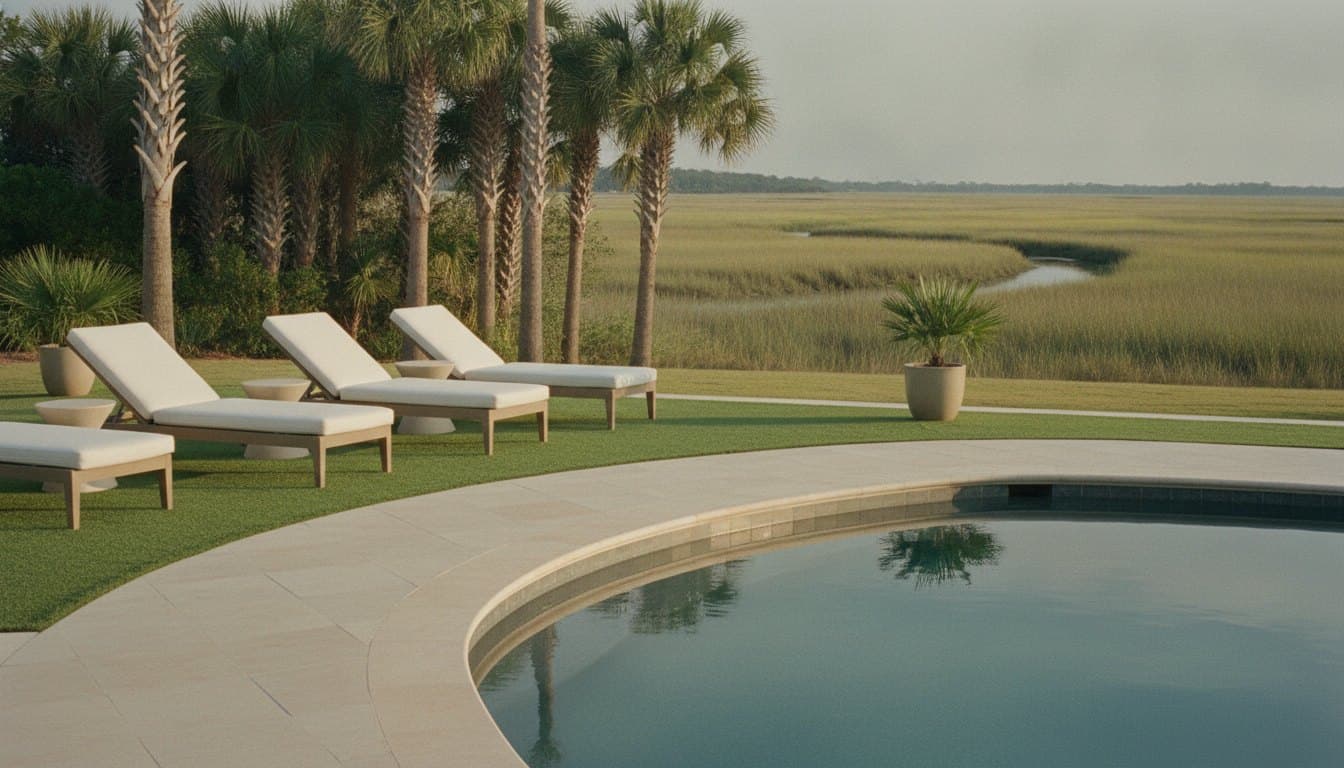
Guide 04 · 4 min read
How Hot Does Artificial Turf Get in a Charleston Summer?
Artificial turf can get considerably hotter than natural grass in direct midday sun, which matters in a Charleston summer. Heat is manageable with design: place turf where there is afternoon shade, choose lighter or heat-reflective fiber blends, use cooling infill, and rinse the surface on the hottest days. In shaded yards and in the morning and evening, turf is comfortable to use.
Read the guide →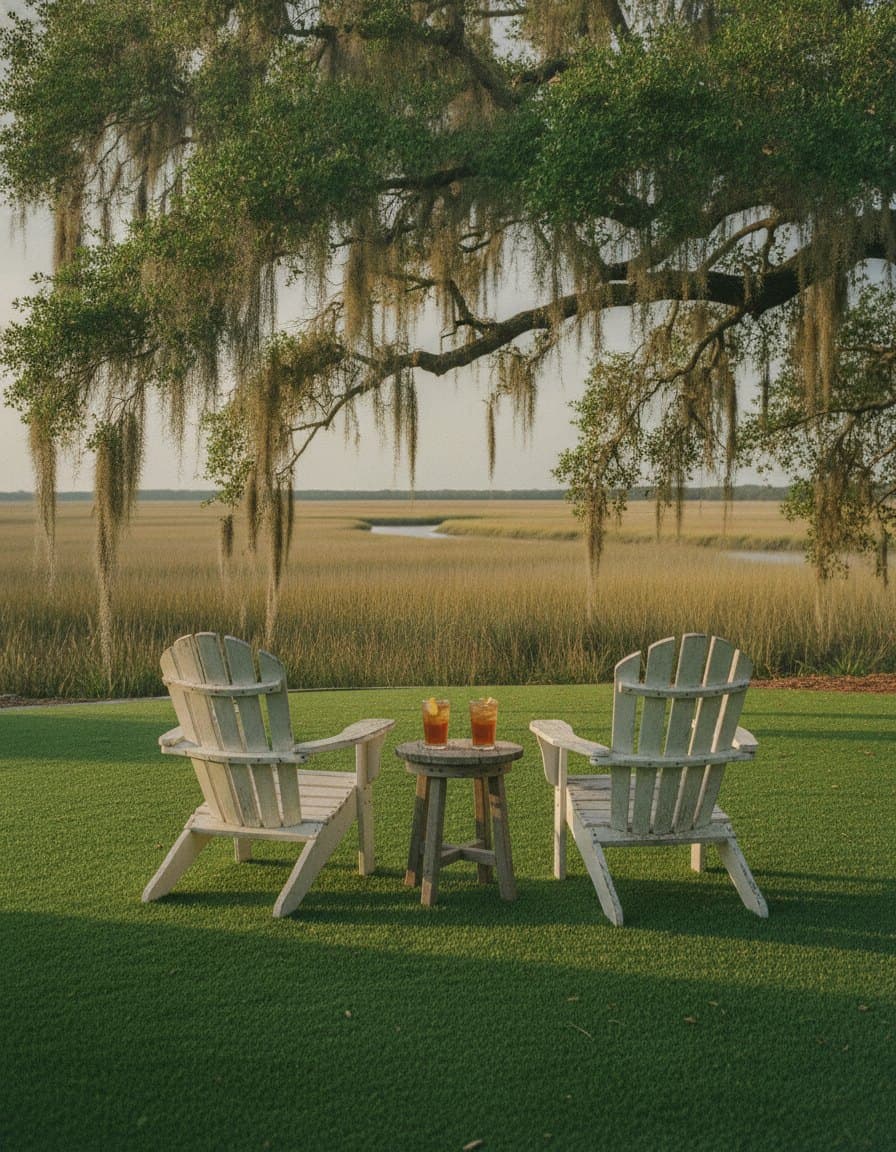
Guide 05 · 4 min read
Artificial Turf Maintenance in the Lowcountry: A Simple Routine
Artificial turf maintenance takes a few minutes a week: blow or rake off leaves and debris, rinse with a hose (weekly in pet areas), and brush high-traffic spots a few times a year so the fibers stand upright. There is no mowing, watering, fertilizing or aeration. An occasional check of edges and seams keeps a turf lawn looking new for years.
Read the guide →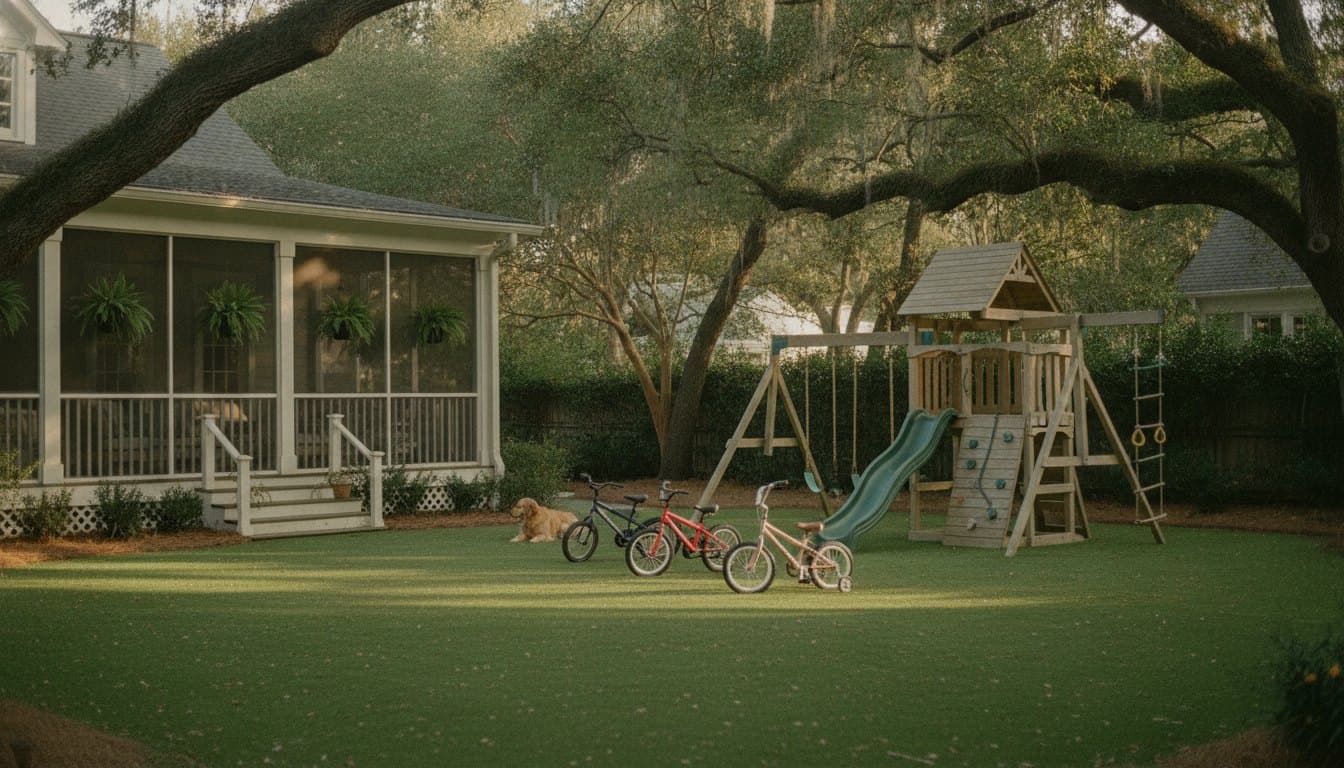
Guide 06 · 4 min read
Grass Won’t Grow Under Your Live Oak? Turf for Shady Charleston Yards
Under a live oak, artificial turf combined with shade-loving native planting is often the best alternative to grass, because turf does not need sunlight. The key is protecting the tree: avoid deep excavation in the root zone, use a shallow, permeable base so water and air still reach the roots, and keep turf back from the trunk. Large “grand” trees can be regulated locally, so check before you dig.
Read the guide →

Ready to ditchthe mower?
Let's build a yard worth hanging out in.
Good turf. Good times.