

Field Guide · 5 min read
The best turf setup for dogs.
By the Marsh & Mane crew · Updated
Key takeaways
- Drainage through the backing is the single most important pet-turf feature.
- Choose a base that can be flushed — odor lives in the base, not just the blades.
- Antimicrobial or zeolite-type infills help control odor in humid weather.
- Shorter, denser piles are easier to clean than long, plush ones.
Why pet turf fails (and how to avoid it)
Most “turf smells” complaints trace back to urine trapped in a backing or base that cannot drain or be rinsed. In a hot, humid climate, bacteria multiply quickly in that trapped moisture.
The fix is designing the whole system for flow: a backing that passes liquid straight through, an open-graded base underneath, and a slight slope so rinse water moves away from the house.
What to look for
When comparing pet turf systems, ask about these components:
- Backing: full-flow or highly perforated, not a standard hole-punched lawn backing.
- Base: compacted, open-graded crushed stone that drains and can be flushed.
- Infill: antimicrobial-coated or odor-absorbing infill for dog runs and potty areas.
- Pile: a shorter, dense pile (roughly 1 to 1.25 inches) is easier to clean and stands up to running.
- Edges: nailed and staked perimeters, or a buried border, to stop diggers.
Design the yard around how your dog moves
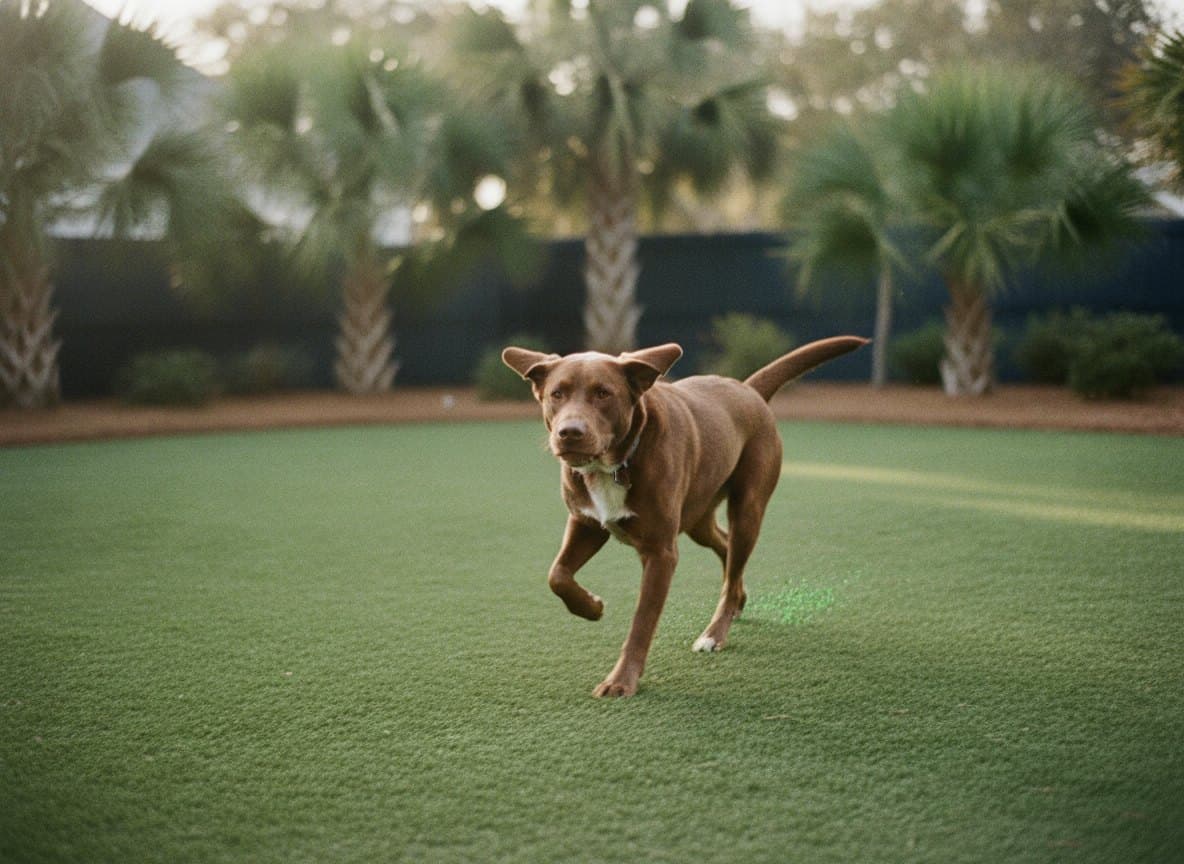
Dogs run predictable routes — fence lines, gates and the path to the back door. We reinforce those zones, keep potty areas close to a hose bib, and add shade so the turf stays comfortable in summer.
A curving path or a change in surface can also steer dogs away from planting beds.
A simple cleaning routine
- Pick up solids as you would on grass.
- Hose down potty areas weekly, more often in summer.
- Use an enzyme-based turf cleaner once or twice a month for heavy use.
- Brush high-traffic areas occasionally so fibers stay upright.
Common questions
Not easily. Properly secured turf over a compacted stone base, with anchored or buried edges, stops most digging. Fence lines are the usual weak point, so we reinforce them.

Ready to ditchthe mower?
Let's build a yard worth hanging out in.
Good turf. Good times.